
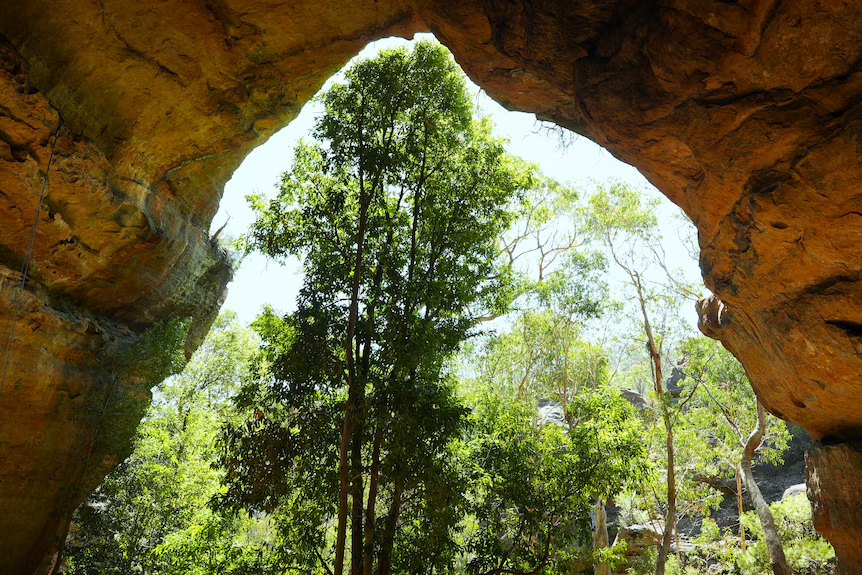
A remarkable archaeological discovery in the Blue Mountains of New South Wales is reshaping what we know about early human life in Australia. Deep inside a vast rock shelter known as Dargan Shelter, researchers have uncovered artefacts dating back as far as 20,000 years, placing human activity at extreme high altitude during the Ice Age.
Located about 1,100 metres above sea level, the site is one of the highest known locations of early human occupation in Australia. Today, the surrounding environment is rugged and difficult to access, filled with steep terrain and dense native vegetation. However, evidence suggests that ancient communities repeatedly returned to this challenging landscape thousands of years ago.
A Shelter Used Across Thousands of Years
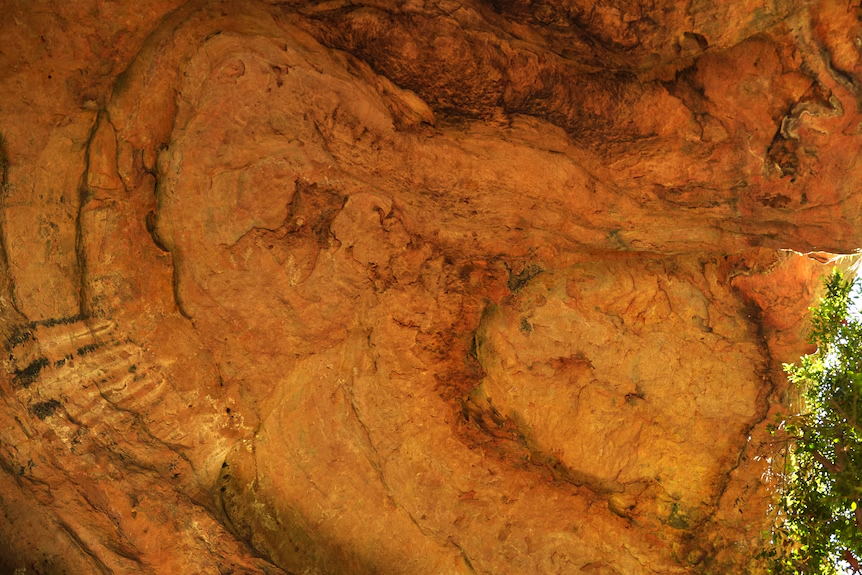
Archaeologists describe Dargan Shelter as an immense natural formation, large enough to accommodate groups of people. Excavations carried out over multiple field seasons revealed a deep sequence of occupation layers, showing consistent human use stretching back to the last Ice Age.
According to researchers, the earliest materials recovered from the site date to around 20,000 years ago, making it a key location for understanding how people lived in colder and harsher environments than those seen today.
Life in a Harsh Ice Age Landscape
During the Ice Age, conditions in the Blue Mountains were significantly colder than present day, with estimates suggesting temperatures were up to 8°C lower. The environment would have been far more demanding, with limited vegetation and scarce resources at high elevations.
Despite this, evidence from the shelter suggests that people did more than just pass through the mountains — they stayed, gathered, and used the area repeatedly over long periods of time.
Archaeological Finds and Everyday Activity
Excavations uncovered hundreds of artefacts, including stone tools and evidence of food preparation. Some objects indicate tool-making activities, such as sharpening materials for use in sewing or hunting equipment. Other stone fragments show signs of use in processing food, including cracking hard seeds or nuts.
These discoveries provide insight into daily life at the site, suggesting it may have functioned as a seasonal stopover or meeting place for travelling groups.
Connections Across the Landscape
Analysis of stone materials shows that some resources were transported from more than 100 kilometres away, indicating long-distance movement and interaction between different groups across the region.
This challenges earlier ideas that the Blue Mountains acted mainly as a barrier. Instead, evidence suggests it may have been part of a broader cultural and travel network connecting communities across eastern Australia.
Cultural Significance and Ongoing Protection
For Traditional Owners and First Nations researchers, the site holds deep cultural meaning. It is understood as part of ancient travel routes and cultural pathways that link communities across Country.
Today, multiple Indigenous groups maintain strong connections to the region, and there is growing emphasis on combining scientific research with cultural knowledge to better protect and understand these places.
Experts and Traditional Owners alike stress the importance of safeguarding such sites, not only for their archaeological value but also for their ongoing cultural significance.